
Melbourne's Pyrox Gas Heater Specialists
Pyrox is one of the most commonly encountered gas heater brands in older Melbourne homes, particularly those built between the 1970s and the early 2000s. Pyrox wall furnaces, space heaters and ducted systems are especially prevalent across Melbourne's south-east suburbs including Bayside, Glen Eira, Kingston, Frankston and the inner east.
Gas Experts Melbourne services and repairs all Pyrox gas heater models across Melbourne. Our licensed gas fitters are experienced with the specific faults, maintenance requirements and parts considerations of Pyrox appliances. We carry the most common Pyrox replacement parts on the van and maintain access to parts networks for older models that are no longer in production.
Like Vulcan heaters, Pyrox appliances are now aging products. Even a Pyrox heater from the early 2000s is over 20 years old. At this age, thermocouples, pilot assemblies, flexible gas hoses, heat exchangers and gas valves all require careful inspection and, in many cases, replacement. A Pyrox heater that has not been professionally serviced in several years should not be operated without a thorough safety check and carbon monoxide test.
About Pyrox Gas Heaters in Melbourne
Pyrox was an Australian gas appliance brand that was widely sold and installed across Victoria and other Australian states from the 1970s through to the early 2000s. Pyrox produced a range of residential gas heating products including wall furnaces, panel heaters, space heaters and ducted gas heating systems.
Pyrox appliances were known for their straightforward, robust construction and their reliability when properly maintained. Many Pyrox heaters installed in the 1980s and 1990s are still in daily use in Melbourne homes, a testament to their build quality. However, at this age they require more careful monitoring, more frequent servicing and honest assessment of whether continued repair or replacement represents the better outcome.
Key safety consideration for Pyrox owners
Every Pyrox heater we service receives a full carbon monoxide combustion test. The heat exchanger in a Pyrox heater of 15 to 25 years old is at a stage of its life where micro-cracks are a genuine possibility. A cracked heat exchanger allows combustion gases including carbon monoxide into the air circulating through the home. Annual CO testing is not optional for a Pyrox heater of this age, it is essential.
Pyrox products commonly found in Melbourne homes
- Wall furnaces in various output sizes
- Panel heaters and space heaters
- Ducted gas heating systems
- Older floor-mounted heaters
Pyrox Models We Service and Repair
Our licensed gas fitters are experienced with the full range of Pyrox gas heaters found in Melbourne homes.
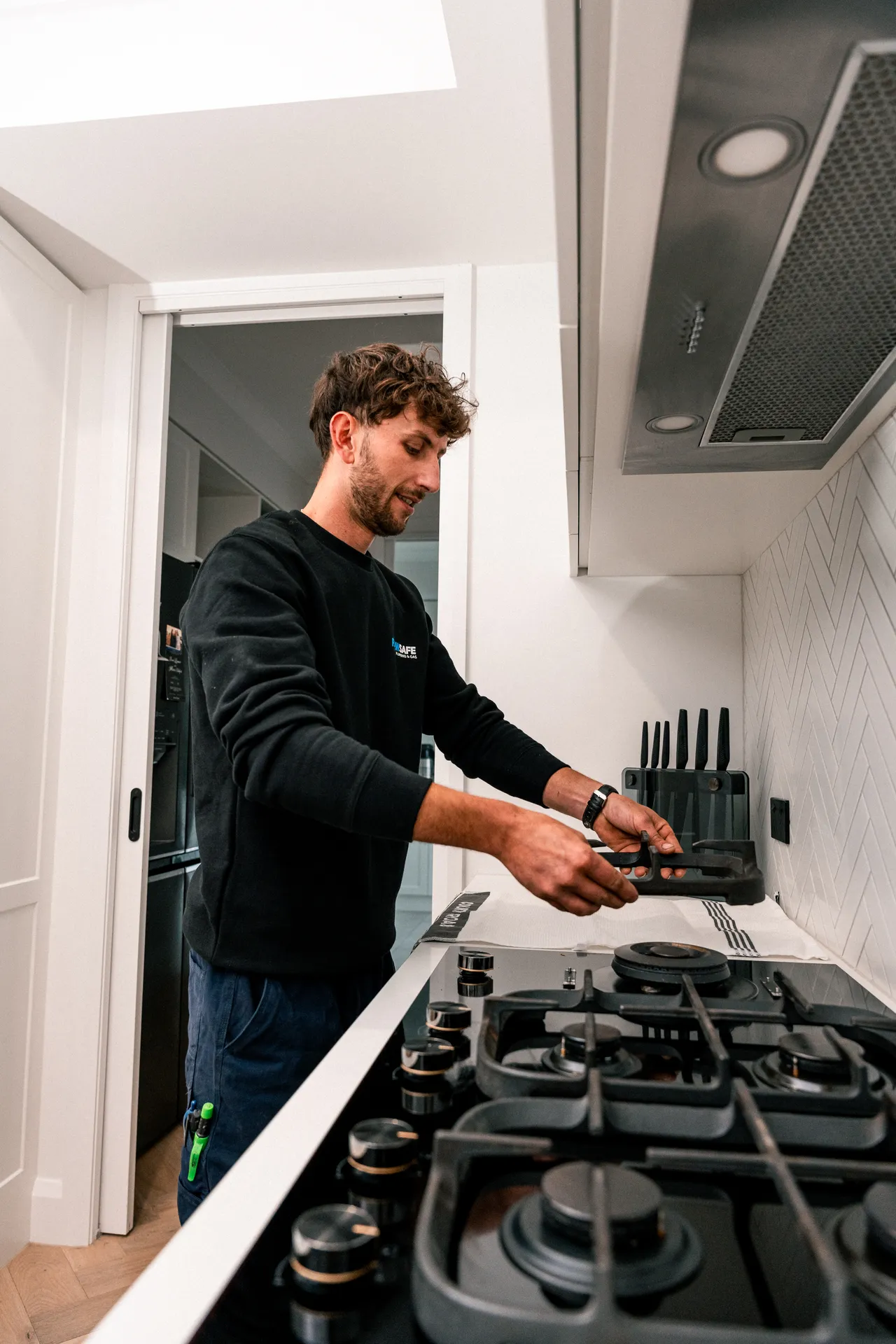
Pyrox wall furnaces are the most common Pyrox product we service across Melbourne. Available in a range of output sizes, these heaters were typically installed in living rooms, bedrooms and hallways. They are mounted to the wall and connect to an external flue (flued models) or vent directly into the room (unflued models).
Common models: Various Pyrox wall furnace models from the 1970s through to the early 2000s.
Common faults: Thermocouple failure (pilot light won't stay lit), pilot assembly deterioration, burner blockage, ignition failure, heat exchanger cracking (CO risk), flexible gas hose deterioration.
Pyrox ducted gas heating systems are found in some older Melbourne homes. These systems are now at an advanced age and require thorough assessment of the main unit, heat exchanger, flue system and duct condition before recommending repair versus replacement.
Common faults: Heat exchanger failure, fan motor failure, ignition faults, duct condition issues, controller faults.
Pyrox panel heaters and freestanding space heaters are found in Melbourne homes, connected to the gas supply via a flexible hose. At this age, the flexible hose is almost certainly overdue for replacement regardless of apparent condition.
Common Pyrox Gas Heater Faults We Repair
This is the single most common Pyrox fault we attend. The pilot lights when the button is held but extinguishes when the button is released.
Cause: Almost always a faulty thermocouple. The thermocouple is the safety device that detects the pilot flame and holds the gas valve open. When it fails, the gas valve closes and the pilot goes out when the button is released.
What to do: This is a straightforward thermocouple replacement. We carry thermocouples for common Pyrox models on the van. Most Pyrox thermocouple replacements are completed within 45 to 60 minutes. Call us for a same-day repair.
The heater fails to light when the ignition is activated or when the main burner is called.
Common causes
- Gas supply issue check other gas appliances
- Dirty or blocked pilot jet restricting gas flow to the pilot
- Blocked or dirty main burner jets
- Faulty gas valve
- Ignition electrode not producing a spark or spark not reaching the pilot
What to do: Check gas supply. Call us for a diagnosis if the supply is confirmed.
The main burner lights but shuts off within 30 to 90 seconds of operation.
Common causes
- Thermocouple on the main burner circuit failing to hold the gas valve open
- Flame sensor not detecting the main burner flame reliably
- Dirty burner producing a weak or unstable flame
- Safety overheat switch activating
What to do: Call us for a professional diagnosis. This is typically a thermocouple or flame sensor fault.
The heater appears to operate, the pilot is lit, the main burner lights, but very little or no heat is produced.
Common causes
- Cracked heat exchanger this is a serious safety concern. A cracked heat exchanger in a Pyrox heater of this age allows combustion gases including carbon monoxide into the living space.
- Severely blocked heat exchanger from accumulated dust and debris
- Very low gas pressure
What to do: Do not continue using the heater. Call us for a heat exchanger inspection and CO test immediately. A Pyrox heater that runs but produces minimal heat should be treated as a potential CO risk until inspected.
The burner produces yellow or orange flames instead of the correct blue flame.
Cause: Incomplete combustion. The burner is not receiving the correct air-to-gas ratio. In older Pyrox heaters, this is commonly caused by blocked burner ports, a blocked combustion air inlet, or spider webs in the air inlet on portable and space heater models.
Why this matters: Incomplete combustion produces carbon monoxide. A Pyrox heater with yellow flames is producing elevated CO levels and must not be used.
What to do: Turn the heater off. Do not use it. Call us for a burner clean, CO test and gas pressure assessment.
A loud bang, boom or pop when the heater starts up, or unusual sounds during operation.
Common causes
- Booming or banging on startup Delayed ignition. Gas accumulates before the burner lights, then ignites with a bang. This is caused by a dirty or blocked burner and is both a safety concern and a sign of a developing fault.
- Rattling Loose casing panels or internal components
- Whistling Restricted gas flow
What to do: A booming startup noise should be investigated promptly. Turn the heater off and call us. Do not continue operating a heater with delayed ignition.
Why the Pyrox Heat Exchanger Is the Most Important Safety Component
The heat exchanger is the metal component that separates the hot combustion gases from the room air that the heater distributes into your home. In a functioning heater, combustion gases, including carbon monoxide, travel through the heat exchanger and are vented outside via the flue. The room air passes around the outside of the heat exchanger, is warmed and is then distributed into the room.
When the heat exchanger cracks, which is a common occurrence in older heaters due to decades of thermal cycling, the barrier between combustion gases and room air is compromised. CO can enter the room air stream. In a fan-assisted heater, CO is actively distributed into the living space.
Pyrox heaters are at particular risk because of their age. A Pyrox heater that is 20 or more years old has gone through thousands of heating and cooling cycles. Metal fatigue is cumulative. Heat exchanger failure is a genuine and not uncommon outcome at this age.
What to do if you suspect heat exchanger failure: Turn the heater off immediately. Do not use it. Call us for an inspection. If a CO alarm has activated, evacuate and call us from outside.
Warning signs of heat exchanger failure
- Heater running but producing significantly less heat than normal
- Soot or black marks around vent openings
- Yellow or orange flames
- Family members experiencing unexplained headaches or fatigue that improve when leaving the home
- CO alarm activating
Pyrox Heater Not Working? We Can Fix It Today.
Gas Experts Melbourne provides same-day Pyrox gas heater diagnosis and repair across Melbourne. We carry Pyrox parts on the van. Most Pyrox faults resolved in a single visit. Carbon monoxide test included on every service. No call-out fee when you book online.

Should You Repair or Replace Your Pyrox Gas Heater?
We are asked this question regularly. Here is our honest guidance.
Consider repairing if
- The fault is a common, low-cost component thermocouple, pilot assembly, flexible gas hose
- The heat exchanger has been inspected and confirmed intact
- The repair cost is clearly less than 40 per cent of replacement cost
- The heater is otherwise performing well
Our commitment: We will always give you an honest assessment of your Pyrox heater's condition and repair viability. If replacement is the right outcome, we will tell you clearly and explain why. If a repair represents good value and safe operation for several more years, we will carry it out.
Consider replacing if
- The heat exchanger has cracked or is producing elevated CO levels, replacement is the only safe outcome
- The heater is over 20 years old and has had multiple repairs
- Parts for your specific model are no longer available
- The repair cost exceeds 50 per cent of a comparable new heater
- The heater is an unflued model and you want to upgrade to a safer flued alternative
- The heater has a very low star rating and you want to reduce running costs with a modern, high-efficiency replacement
What's Included in Our Pyrox Gas Heater Service
- Visual inspection of the entire heater: casing, controls, vents and condition assessment
- Burner clean and inspection: remove all carbon deposits, check burner port condition
- Heat exchanger inspection: visual check for cracks, discolouration, deterioration
- Flue inspection: check condition, connections and external termination
- All gas connections and flexible hose checked for leaks and hose age
- Pilot light assembly inspection, clean and test
- Thermocouple inspection and test
- Gas valve inspection and function test
- Thermostat calibration check
- Carbon monoxide combustion test: measure CO levels in flue gases
- Ambient CO monitoring in room air during operation
- Full gas pressure test
- Safety device function test
- Written service record documenting all test results, condition findings and recommendations
Pyrox Gas Heater Service Costs in Melbourne
We provide fixed-price quotes: no hourly rates, no call-out fee when you book online.
| Service Type | Approximate Cost |
|---|---|
| Pyrox gas heater annual service | From $150 to $220 |
| Pyrox thermocouple replacement | From $150 to $210 |
| Pyrox pilot assembly clean and service | From $130 to $190 |
| Pyrox flexible gas hose replacement | From $99 to $180 |
| Pyrox heat exchanger inspection and CO test | From $120 to $180 |
| Pyrox gas valve replacement | By quote after diagnosis |
Note: Prices are indicative ranges. A fixed price is confirmed before any work begins.
Special Offers
- Pensioner Discount 10% off all Pyrox services for pension and concession card holders.
- Multi-Heater Discount Second heater serviced in the same visit at a discounted rate.
- CO Alarm Supply and Install Dual smoke and CO alarm supplied and installed from $66, strongly recommended for all homes with older gas heaters.
Why Melbourne Homeowners Choose Gas Experts Melbourne for Pyrox Service